

Foundation Settlement Repair in St. Louis
Permanent stabilization using engineer-certified helical piers and American-made steel. We reach past shifting clay to secure your home in load-bearing soil, backed by a lifetime transferable warranty.


Schedule a free settlement assessment below 👇
Why St. Louis homeowners trust Jet for settlement repair
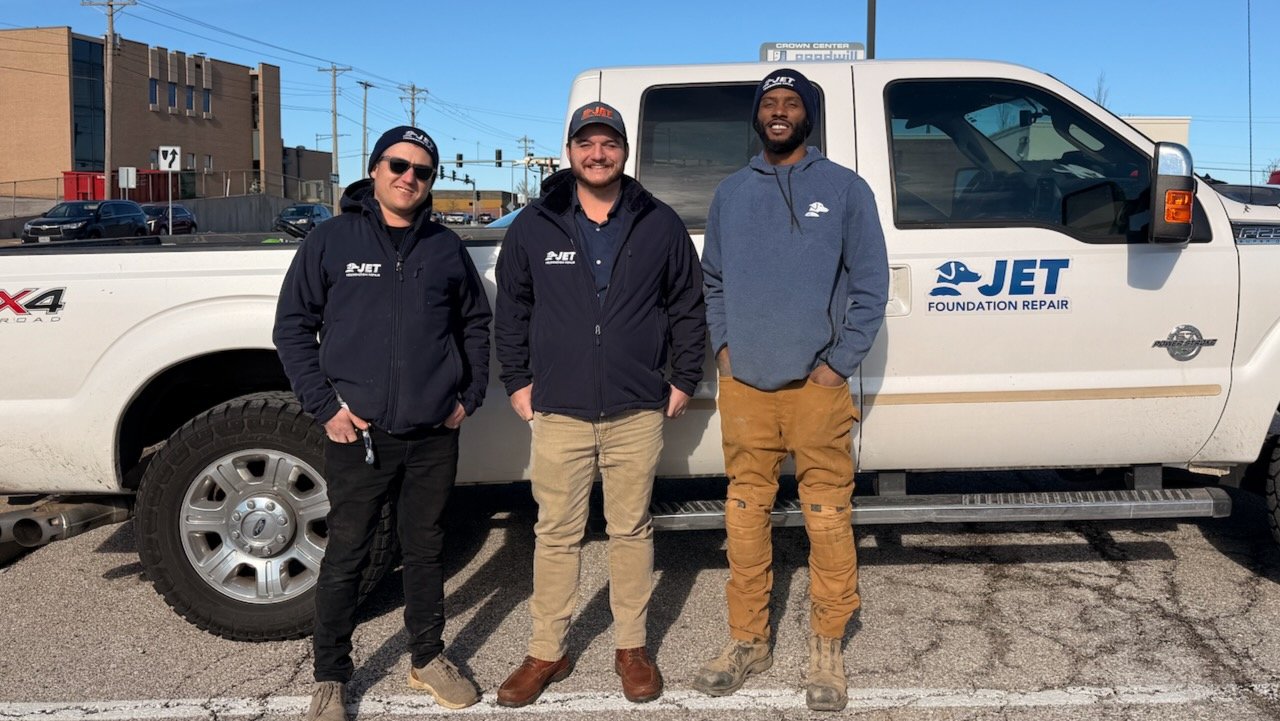
We believe foundation repair should be transparent and permanent. From our initial honest assessment to the final lift, we prioritize your home’s long-term integrity over high-pressure sales.
Honest, professional inspections
We provide a detailed engineer-led report and a fixed-price quote with every free foundation assessment. Plus, we’re BBB-accredited, licensed, insured, and manufacturer-certified in the materials we install.
Lifetime transferable warranty
We are so confident in our structural solutions that every pier installation is backed by a written, lifetime transferable warranty. This guarantee stays with the home, ensuring peace of mind for you and providing a massive advantage if you ever decide to sell your property.
We live in this community
We’re going to do a good job so that we don’t have to worry about running into you at Schnucks. Also, we donate a portion of our profits to APA Missouri, because we love our city and it’s pets.
Signs of foundation settlement in St. Louis homes
See how we permanently fix foundation settlement using helical piers. In this video, our crew drives engineer-certified steel supports deep past the shifting St. Louis clay to reach solid, load-bearing soil. Unlike temporary concrete patches, this process transfers the weight of the home to stable ground, allowing us to lift the footing, close stair-step cracks, and lock the foundation in place with a lifetime warranty.
While every home settles slightly over time, the expansive clay in the St. Louis metro can cause uneven, structural settlement that threatens your home’s value. Early detection can be the difference between a one-day foundation repair and a major construction project.
Distinguishing settlement from typical cracking
Vertical cracks are often just the result of concrete shrinkage, but diagonal cracking at corners or horizontal cracks in your basement walls could indicate structural movement. If you notice the corners of your basement staying put while the center of the wall is pushed in, you are likely experiencing foundation settlement.
Visual warnings: sticking doors & stair-step cracks
When a foundation moves, it twists the framing of the floors above. If you find your windows and doors are jamming or sticking, or if you see stair-step cracks in your exterior brickwork, your foundation is no longer supported by stable soil.
Foundation settlement repair in St. Louis
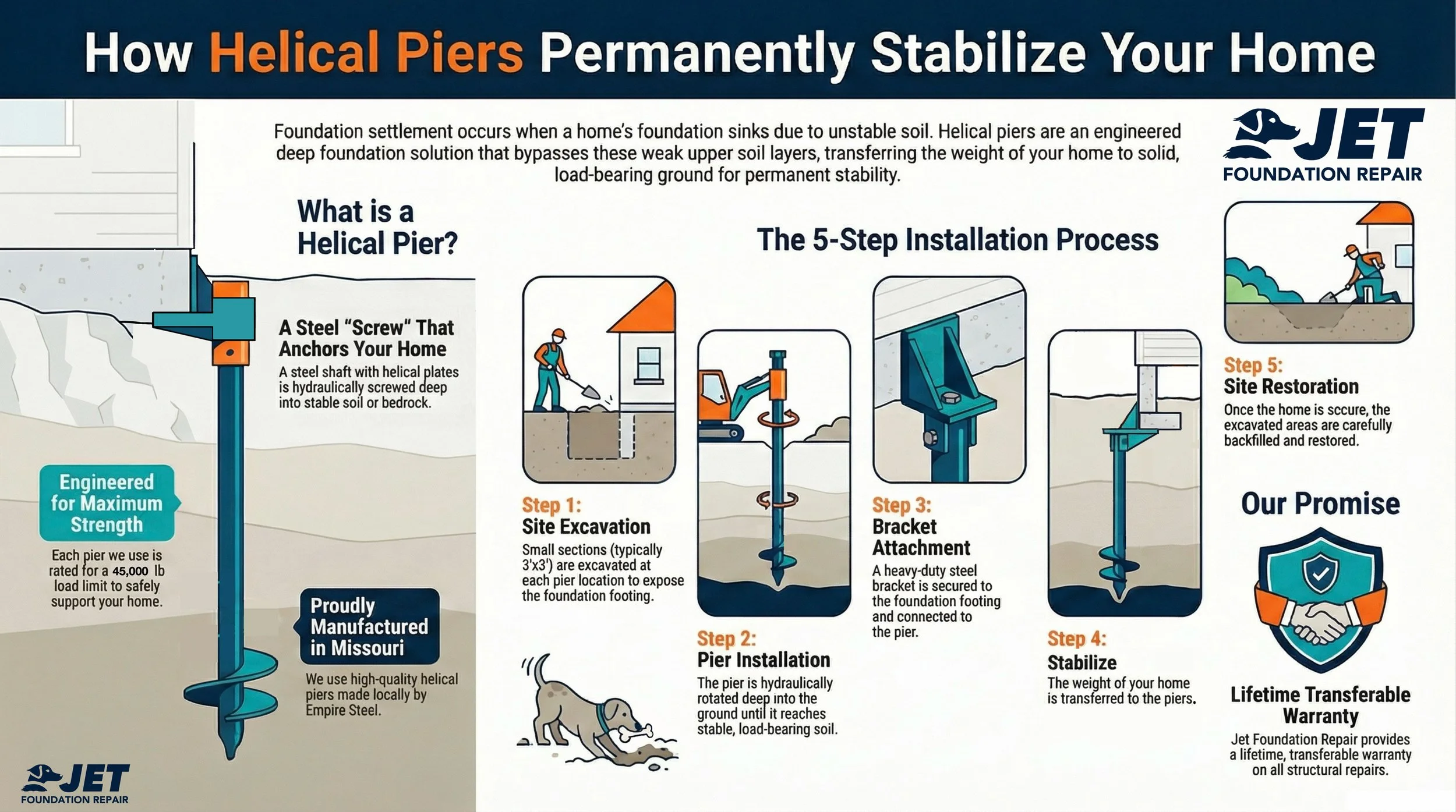
What you are seeing is the 'bite' of an Empire Pier, manufactured right here in Winfield, MO. Each pile is driven until it hits strict torque requirements, and the system includes a precision lift bracket rated for 80,000 lbs of ultimate capacity.
Why we choose helical piers over concrete
Precision You Can Measure (No Guesswork) Concrete shoring is often a guessing game where you hope it hits hard soil. With helical piers, we monitor the hydraulic torque (rotational force) in real-time as we drive the pier. This data tells us exactly when we have reached load-bearing soil capable of holding your specific home. If the gauge doesn't hit the target number, we go deeper. It’s that simple.
Minimal Vibration (Protecting Your Structure) If your foundation is already cracking, the last thing you want is a heavy machine pounding concrete piles next to your wall. Helical piers are screwed into the earth using hydraulic motors. This process is quiet and produces almost zero vibration, protecting your fragile brickwork and drywall from further stress during installation.
The "Do It Once" Warranty We are so confident in the stability of helical piers that we back every installation with a Lifetime Transferable Warranty. We don't just fix the settlement; we guarantee the solution for the life of the home.
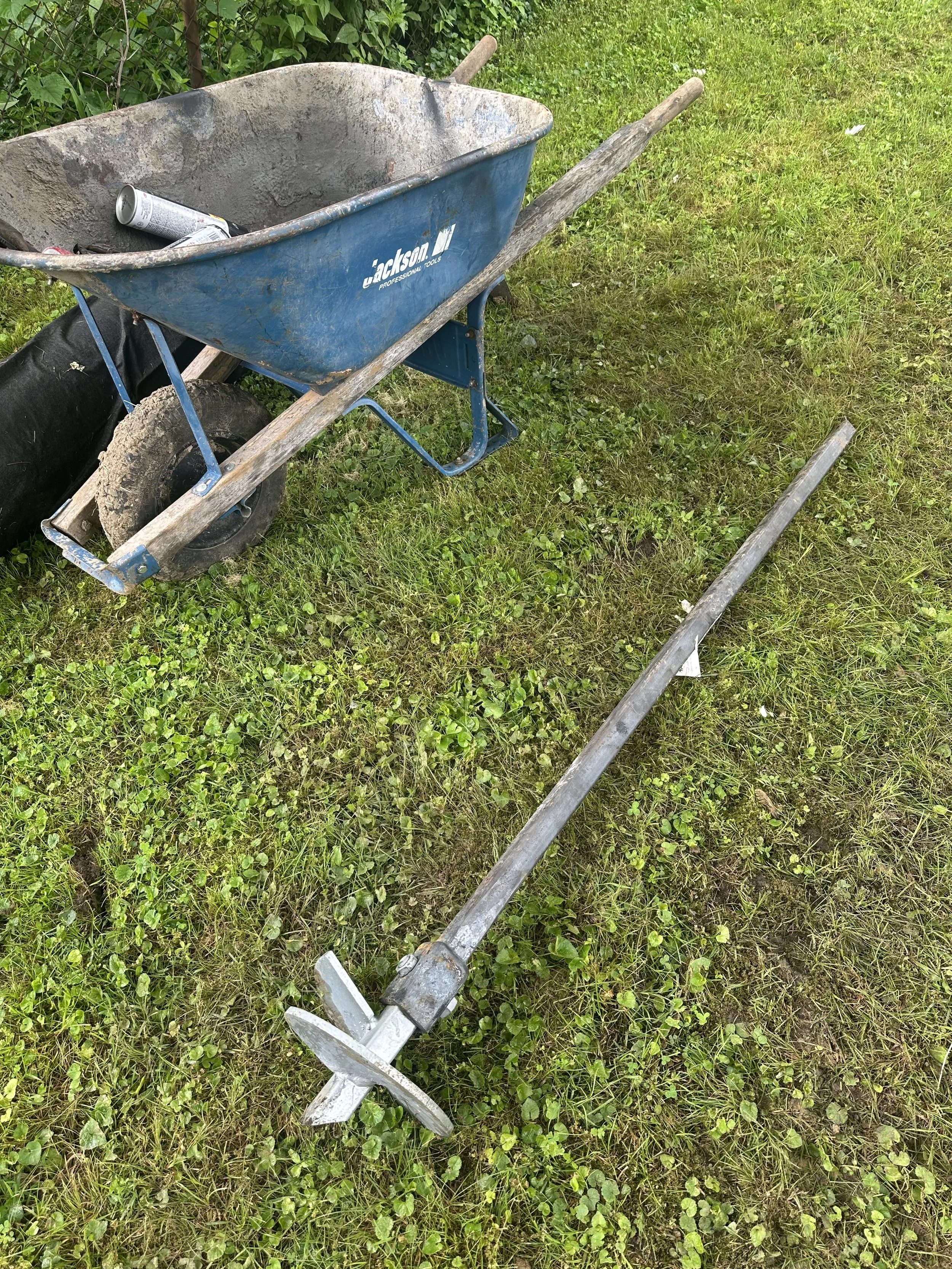
What you see here is just the lead section - we bolt these steel shafts together one by one, driving them 20, 30, or more feet until we hit solid, load-bearing soil that can hold your home forever.
Financing for foundation settlement repair

We don’t hide financing costs in our quotes by offering "0% interest" loans. Instead, we have partnered with Acorn Finance to give you direct access to the best personal loan options on the market without inflating our repair costs.
Many contractors have to raise their prices by 10-20% to offer "0% financing" because of hidden dealer fees. We keep our prices honest and let you choose the financing that works for you.
Frequently asked questions about settlement
Will installing piers close the cracks in my brick?
However, our primary engineering goal is stabilization—guaranteeing your home never sinks further. While we always aim for maximum recovery (lift), factors like how long the house has been settled can limit how much we can lift without damaging the structure.
How long does the installation process take?
Is foundation settlement repair expensive?
Our foundation repair services
We offer a full range of foundation crack repair services in St. Louis and nearby communities:
Our St. Louis service areas for settlement repair
Jet Foundation Repair proudly provides structural stabilization services throughout the Greater St. Louis metropolitan area. We understand how the expansive clay soils in neighborhoods like Chesterfield, Wildwood, and St. Charles can shrink and swell, causing foundations to settle unexpectedly. Whether your home is in Ladue, Webster Groves, Fenton, or O'Fallon, our team is local, ready to respond, and equipped with the deep-earth solutions necessary to secure your investment against our region’s unpredictable geology."