

Bowing basement wall repair in St. Louis
Engineer-Led, Employee-Owned, Lifetime Warranty


Noticing a curve in your basement wall or a long horizontal crack? You aren’t alone. St. Louis clay soil puts immense pressure on foundations, but a bowed wall doesn’t mean you need to rebuild your home.
Schedule a free inspection below 👇
Our carbon fiber wall strap installation process
Step 1 Surface Prep (Grinding the wall clean).
Step 2: Epoxy Application (The bonding agent).
Step 3: Strap Installation & Anchoring (Connecting to the rim joist).
Step 4: Clean Up (We treat your home like ours).

Signs your foundation walls are failing
If you aren't sure if your foundation issues are "serious" yet, look for these specific warning signs. Early detection is the difference between a clean, one-day repair and a major construction project.
Horizontal or Stair-Step Cracks: Unlike vertical cracks (which are often just shrinkage), horizontal cracks in block or poured walls may indicate lateral pressure is being applied to the wall.
Bulging Walls: If you put a level against the wall and it rocks or shows a curve in the center, the wall is bowing inward.
Diagonal Cracking at Corners: This often looks like the corners of the basement are staying put while the center of the wall is being pushed in.
Sticking Doors and Windows: When the foundation moves, the framing above it twists, causing windows and doors on the floor above to jam or stick.
Why do basement walls bow in St. Louis?
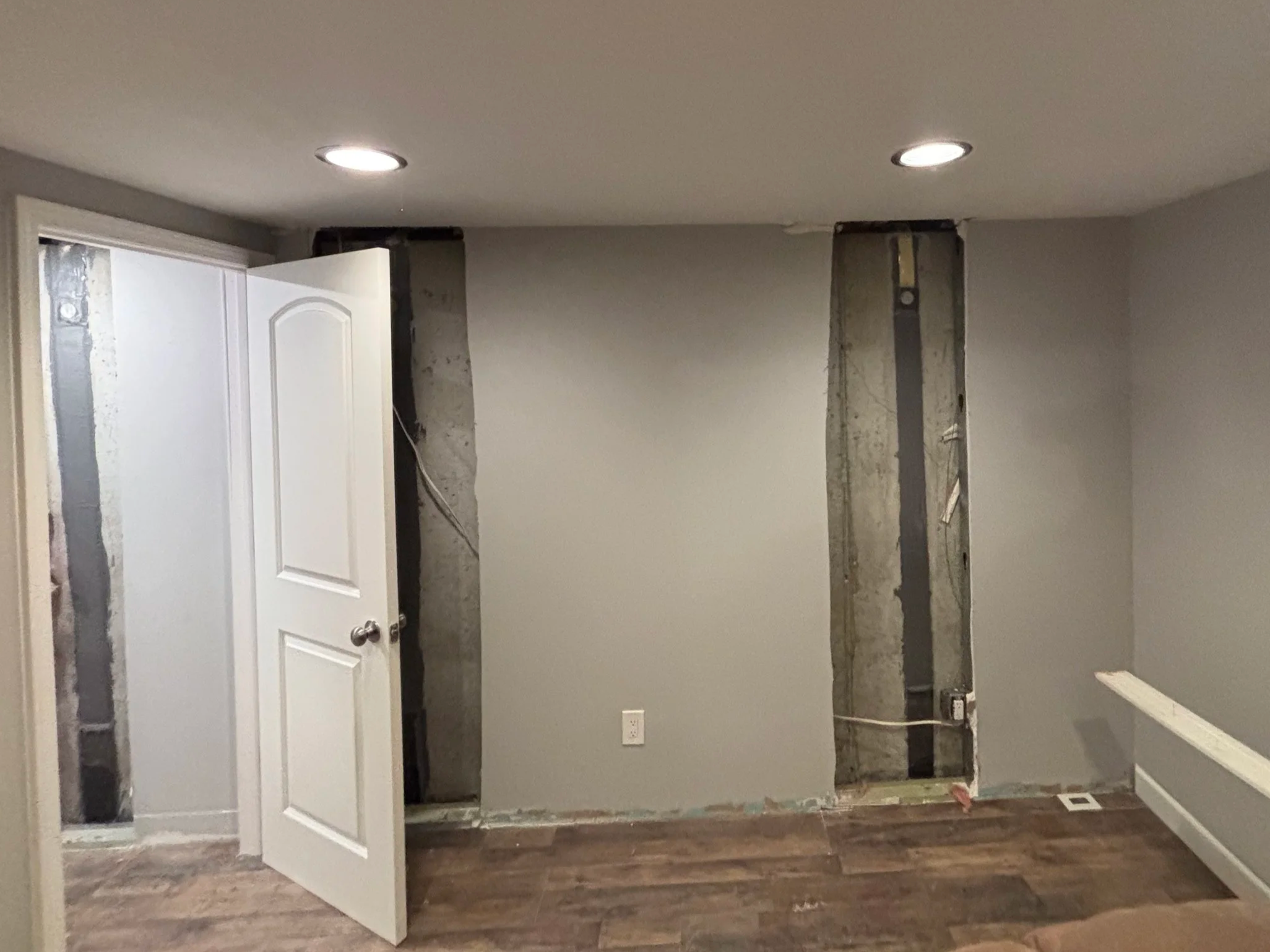
Before
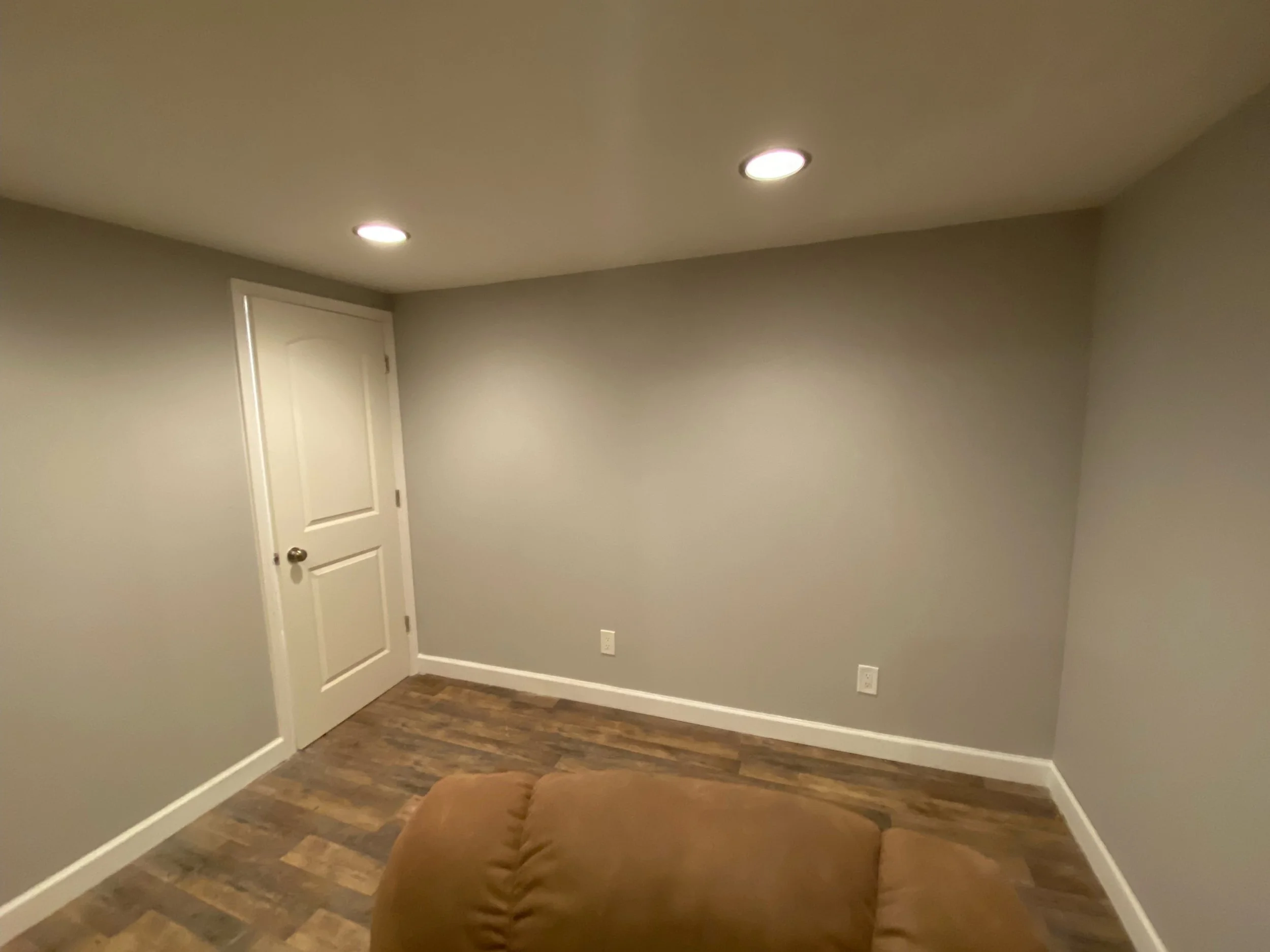
After, like we were never there…
St. Louis is famous for its expansive clay soil. When it rains, this clay acts like a sponge, soaking up water and expanding significantly. This creates hydrostatic pressure, thousands of pounds of force pushing against your foundation. Over time, this pressure exceeds the strength of your concrete or block walls, causing them to lean, bulge, or "bow" inward.
Important Note: Bowing is different from settlement (sinking). If your house is sinking, you need piers. If your walls are bending in, you need lateral stabilization. At Jet, we diagnose the difference correctly so you never pay for a repair you don't need.
Professional bowing wall stabilization solutions
Key Advantages of Fortress Invisibeam Carbon Fiber
ICC-Certified & Patented: The only carbon fiber system independently tested and code-approved.
Clean Installation: Flush-mounted straps epoxy directly to your wall and anchor into the top framing with patented fasteners.
Permanent Stabilization: Prevents further movement without excavation or intrusive steel beams.
Aesthetic Finish: The low-profile straps can be painted or finished for a clean, unobtrusive appearance.
Engineer Reviewed & Warrantied: Every design is reviewed by Fortress Stabilization Systems and supported by a 20-year transferable warranty.
Fortress InvisiBeam is a carbon fiber reinforcement system that uses Kevlar-infused straps to permanently stabilize bowing basement walls without the need for invasive steel beams.
Each installation is engineer-reviewed and backed by a lifetime transferable warranty.
Fortress InvisiBeam® carbon fiber straps
Steel I-beam reinforcement
If your wall has significant deflection, we may recommend Steel I-Beam reinforcement. We custom-fit structural steel beams to the height of your wall, anchoring them to the floor and the joists above. This "skeleton" provides massive resistance against exterior soil pressure, ensuring your home remains stable for decades.
InvisiBeam vs. steel I-beams: which is right for you?
We believe in the right tool for the right job. While we install both systems, we want you to know the difference so you can make the best decision for your home.
Our Honest Take: "If your wall is too far gone, we will recommend steel beams or tiebacks. But for most homeowners catching the problem early, InvisiBeam is the superior, non-intrusive choice."
| Feature | Fortress InvisiBeam® | Steel I-Beams |
|---|---|---|
| Best For | Walls bowing less than 2 inches | Severe bowing (2+ inches) |
| Invasiveness | Low. No concrete breaking required. | High. Requires jackhammering floor. |
| Aesthetics | Invisible. Paintable and flush with wall. | Obtrusive. Industrial steel beams stick out. |
| Space Lost | None. (Flat against wall) | 6–12 Inches of floor space lost. |
| Strength | Stronger tensile strength than steel. | Relies on brute force and rigidity. |

Financing for basement wall repair

We don’t hide financing costs in our quotes by offering "0% interest" loans. Instead, we have partnered with Acorn Finance to give you direct access to the best personal loan options on the market without inflating our repair costs.
Many contractors have to raise their prices by 10-20% to offer "0% financing" because of hidden dealer fees. We keep our prices honest and let you choose the financing that works for you.
Frequently asked questions about bowing wall repair
-
The short answer: At Jet Foundation Repair, we believe in transparent pricing. Our Fortress InvisiBeam® Carbon Fiber straps are installed starting at $900 per strap.
The detailed answer: The total cost depends on the length of the wall and the severity of the bow. Because carbon fiber straps must be spaced every 4 feet to meet code requirements, you can estimate your cost by measuring the affected area.
For a typical St. Louis basement with a bowing wall, here is what the math usually looks like:
Minor Bowing (10-foot section): ~3 straps ($2,700)
Average Wall (20-foot section): ~5–6 straps ($4,500 – $5,400)
Severe Bowing: If the wall is bowed more than 2 inches, or requires steel I-beams, costs can range from $6,000 to $10,000+ depending on if excavation is needed.
Why this is the best value: While $900/strap is an investment, it is often 30-50% less expensive than the alternative of excavating the outside of your home to straighten the wall. Plus, unlike steel beams which cost a similar amount but ruin your basement's aesthetic, InvisiBeam adds value by allowing you to finish and paint your basement walls seamlessly.
Note: Final pricing may vary based on height of wall, access, and prep work required. Schedule a free inspection for an exact quote.
-
The honest answer: Yes, if left ignored for many years, a bowing wall can eventually lose its structural integrity and collapse. However, foundation failure is typically a slow, progressive process—it rarely happens overnight without warning signs.
The reality (No scare tactics): At Jet Foundation Repair, we inspect thousands of St. Louis basements, and we believe in putting data before fear. In our experience, only about 1 out of every 100 homes we visit presents an imminent safety risk.
Most bowing walls are in a stage of slow movement. While they look concerning, they can usually be permanently stabilized with InvisiBeam or other methods long before they become dangerous.
When you should act: While immediate collapse is rare, the problem will get worse and more expensive to fix if you wait. If you are concerned for your safety—especially if you notice the wall moving quickly, hear loud popping sounds, or see gaps opening up rapidly—please contact us or another structural professional immediately. It is always better to verify your safety with an expert inspection than to worry.
-
The short answer: No. If your wall is bowing, curving, or has horizontal cracks, epoxy alone is not a solution.
The explanation: Epoxy injection is a fantastic waterproofing seal for vertical cracks that are stable (not moving). However, it has very little tensile strength.
Think of a bowing wall like a broken leg.
Epoxy is like putting a band-aid on the skin. It might cover the crack, but it does nothing to support the bone.
InvisiBeam Straps are like a cast or a splint. They provide the structural strength needed to hold the wall together and prevent it from bending further.
If you fill a horizontal structural crack with epoxy without installing reinforcement straps, the wall will continue to move. The crack will simply re-open (often right next to the epoxy line), and you will have wasted money on a repair that didn't fix the root cause.
Our recommendation: We always seal the crack to keep water out, but for bowing walls, we do it alongside the installation of carbon fiber straps to ensure the repair is permanent.
-
For most residential bowing walls (less than 2 inches of movement), Carbon Fiber is superior. It is stronger than steel, requires no maintenance, and preserves your living space.
Steel beams are typically reserved for extreme cases where the wall has moved significantly.
-
Yes! Lifetime, and transferable in case you sell the home. sale. Additionally, should a failure occur, Fortress will pay in full for materials and labor to an authorized InvisiBeam® installation contractor to repair or replace defective material. More information here.
-
Most carbon fiber installations are completed in one day, with no excavation required.
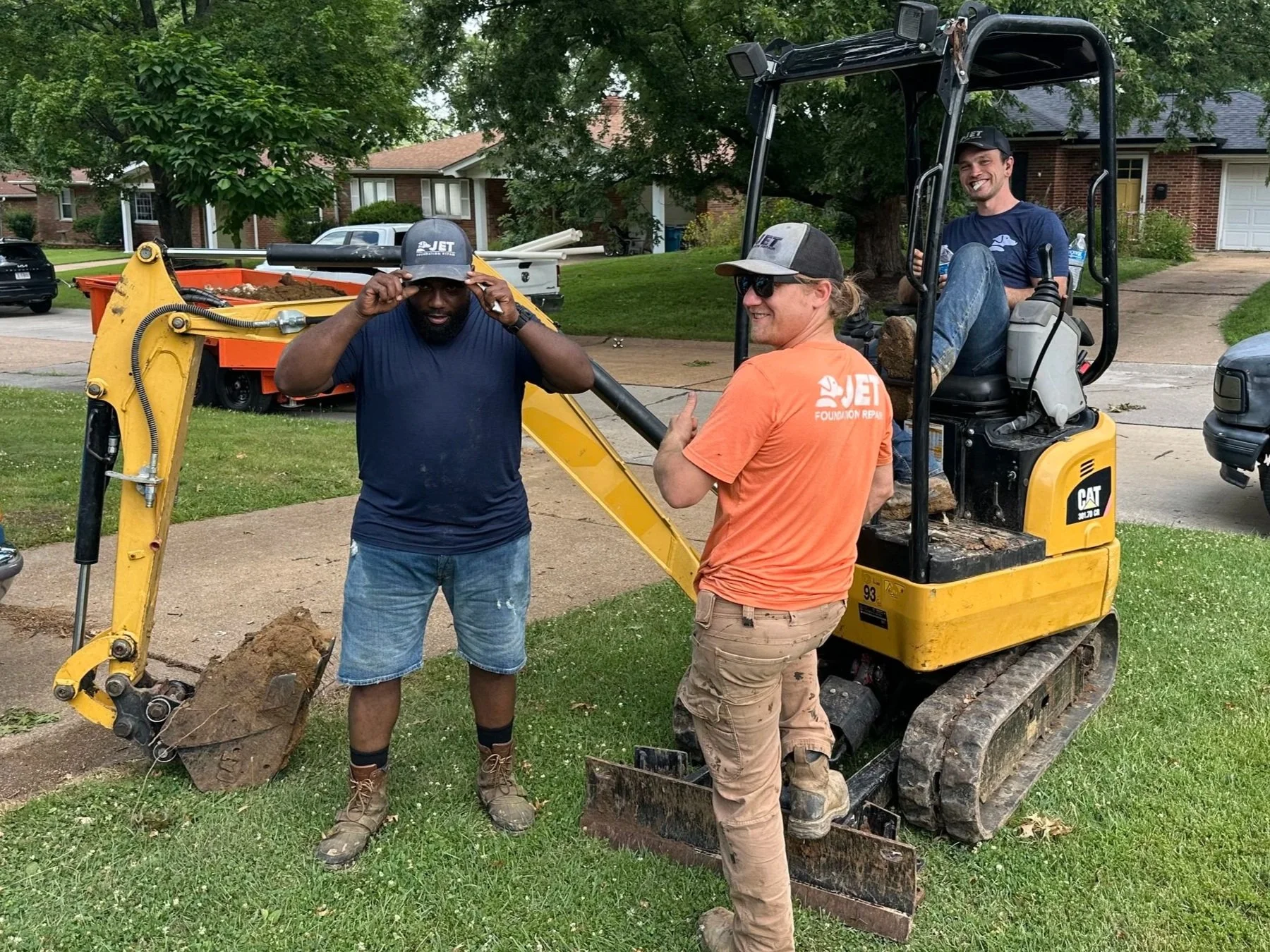
Why trust Jet Foundation Repair with your home?
We don't guess with your foundation. Every InvisiBeam® installation is calculated, certified, and backed by science to permanently stabilize your St. Louis home.
Certified Fortress Installers
We are officially certified installers of the Fortress InvisiBeam® system. We don’t dabble in structural repair; we specialize in it. Our team is trained to install carbon fiber straps to strict ICC standards.
Engineer-Reviewed Projects
You shouldn't have to take our word for it. Our structural repair plans are reviewed by third-party engineers to ensure the load calculations are correct for your specific soil and wall pressure.
Lifetime Transferable Warranty
We install permanent solutions, not band-aids. Your InvisiBeam system comes with a lifetime warranty that transfers to the next owner. This turns a "foundation problem" into a verified asset.
The "No-Mess" Promise
Unlike crews who install steel beams, we leave no dust, no jackhammer debris, and no mess behind. The only evidence we were there is a perfectly stabilized wall.
Our foundation crack repair services
We offer a full range of foundation crack repair services in St. Louis and nearby communities:
Our St. Louis service areas for bowed wall repair
From St. Charles to the Metro East, we protect homes against the unique challenges of Missouri’s expansive clay soil.
Foundation repair isn't the same everywhere. In the Greater St. Louis area, our homes are built on "expansive clay" soil. When it rains, this soil swells and pushes against your basement walls with thousands of pounds of pressure—often causing the very bowing and buckling we specialize in fixing.
We don't just work in these neighborhoods; we know exactly what is happening under them.
We’re nearby, our service area for basement waterproofing and foundation repair includes:
Benton Park, MO
Clayton, MO
Eureka, MO
Shaw, MO
St. Peters, MO
Warrenton, MO
Wildwood, MO